19 May 2026
8:00 AM EDT / 2:00 PM CEST
ELIF KAYMAZ
Middle East Technical University
Respondent: Cansu Degirmencioglu, Technical University of Munich
![]()
Marked with projected defensive sites, the 1:100,000 map of Mersin and its surroundings, 1941. ATASE Military History Archives, 110-9-1-14 (4/0/113)
***
From Fences to Statutes: Privacy, Property, and Self-Governance in Post-Detonation Los Alamos, 1955-1965
LEALLA SOLOMON
Princeton University
Respondent: Heather Jahrling, Princeton University
 The Zia Company Electric Utility, 1961,
Cowan Collection, Los Alamos Historical Society Archives, Los Alamos, New Mexico, Community,
Box 6,
Folder 36.
8:00 AM EDT / 2:00 PM CEST
Architectures of Anticipation: Illustrated with Three Acts from Wartime Turkey
ELIF KAYMAZ
Middle East Technical University
Respondent: Cansu Degirmencioglu, Technical University of Munich
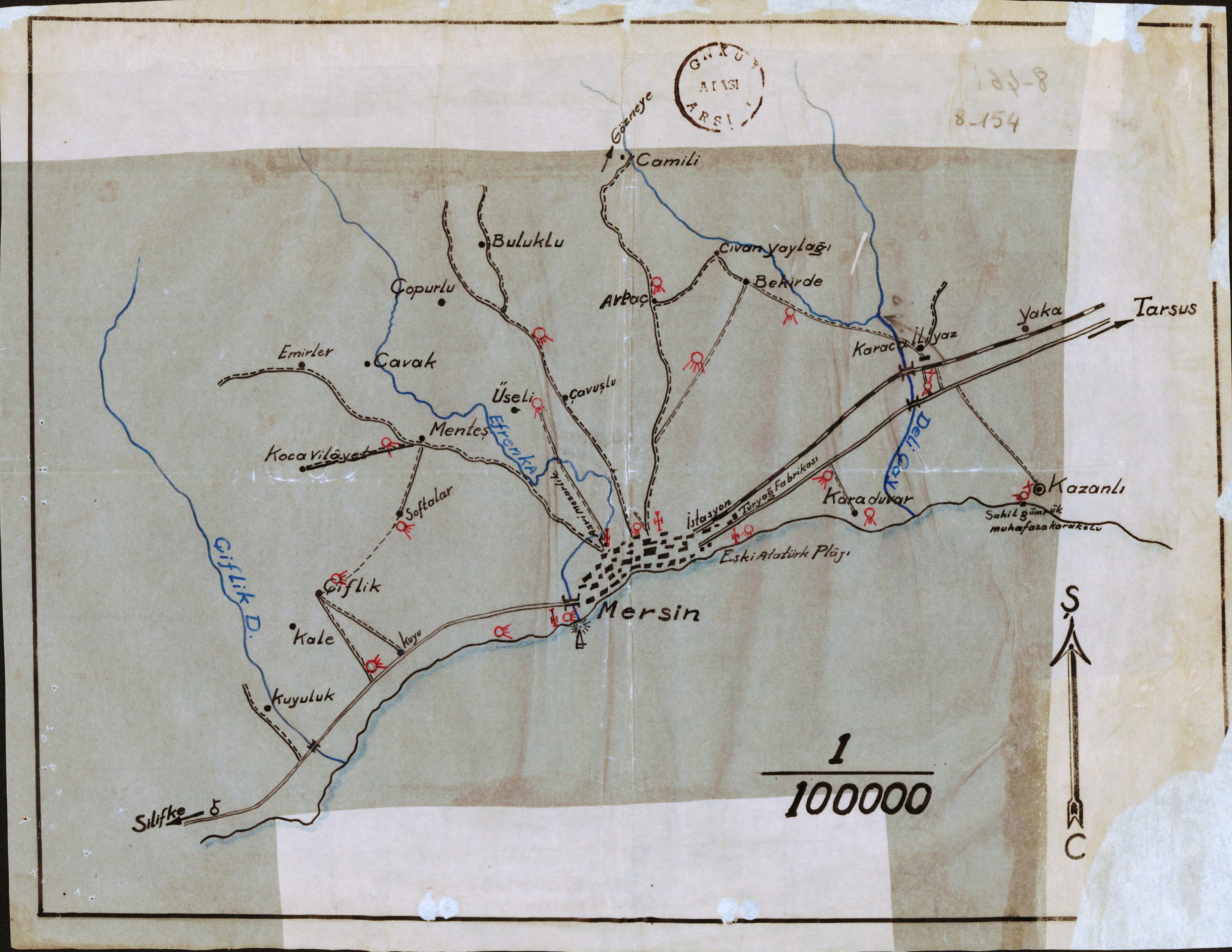
Marked with projected defensive sites, the 1:100,000 map of Mersin and its surroundings, 1941. ATASE Military History Archives, 110-9-1-14 (4/0/113)
Architectures of anticipation names how Turkey, officially neutral yet deeply entangled in the Second World War, reshaped its environments between 1935 and 1945. The expectation of conflict generated infrastructures, standards, and surveys, and redistributed responsibilities across institutions, experts, and publics. This future-oriented mindset materialized in ports and trenches, in manuals and gas-mask drills, and in the atmospheres and vulnerabilities of cities. The talk examines three acts through which this orientation becomes visible. In the south, army sergeant Vecihi Akın’s twenty-one-day field notes and sketches, produced while translating for a visiting British general, capture the routines of coastal defense under neutrality. Moving from decisions on defending hills to the social rhythms of travel, his records reveal intertwined practices of territorial assessment, diplomacy, and Allied information-gathering. In Istanbul, journalist Nusret Sefa Coşkun’s series on the Byzantine cisterns revisited the city’s underground at a time when shelter construction stalled and finances were strained. His reports on damp vaults, blocked passages, and unexpected capacities reframed these spaces as practical assets, turning the subterranean past into a prospective infrastructure of protection later echoed by foreign experts and municipal decisions. At the Red Crescent’s gas-mask factory, chemist Nuri Refet Korur’s manuals, journal writings, and experiments chart preparation at the scale of the body. The factory’s respirator production, largely undertaken by women workers, paired with Korur’s technical work to form a laboratory of design, discipline, and care, shaping new domestic expertise around toxicity and protection. These acts show how futures of destruction were made workable in the present: by mobilizing bureaucracies, furnishing environments, and inscribing routines onto bodies. They reveal communicative, territorial, organizational, and epistemological practices through which environments became governable under crisis, authority and labor shifted, and fear and hope informed spatial imagination. This framework clarifies how projected futures of war, climate, or displacement, reorder the present and why such dynamics matter for architectural history.
***
From Fences to Statutes: Privacy, Property, and Self-Governance in Post-Detonation Los Alamos, 1955-1965
LEALLA SOLOMON
Princeton University
Respondent: Heather Jahrling, Princeton University
The Zia Company Electric Utility, 1961,
Cowan Collection, Los Alamos Historical Society Archives, Los Alamos, New Mexico, Community,
Box 6,
Folder 36. Histories of American domesticity regard privacy as a building’s relationship to the exterior. Discourses of model suburban living have elevated Levittown as the postwar model of American living, effectively marking privacy through the typology of the suburban house and its appurtenances. The fence, lawn, shaded windows, curtains, and acoustic measures have established themselves as markers of privacy in modernity, equating privacy with the ability to separate the individual from the adjacent exterior. This presentation seeks to challenge the canonical presumption by interrogating the urban planning of Los Alamos—the infamous atomic energy town—after the detonation. It contends that under the mantle of “disposal plans” ( the Atomic Energy Commission’s federal plan to privatize Manhattan Project towns and transform them into self-governed entities), the Atomic Energy Commission reinvented American privacy and individuality. Through an extensive archival investigation of reports, studies, recommendations, official letters, and community registers produced between 1955 and 1965 in the attempt to safeguard and promote domestic nuclear production through the creation of the town’s “self-governance,” I mobilize the notion of the private from the realms of domestic design to urban planning, management, and assertion of control. In this presentation, I will show how previous privacy-generating entities, rooted in domestic architectural settings, morphed into a legal and economic mechanism that prioritized administrative and interiorized separation from the one exhibited to the outside. With an emphasis on property deeds and transfers, the ability to separate shared utilities and mortgage payments (both between families and between citizen entities and the federal government), and the simple legal definition transfer of a typology (from “multi-family house” to “single family house”), this presentation seeks to mobilize architectural privacy into the realms of law, governance, and politics. Reconfiguring privacy’s material assumptions, I challenge how privacy is thought of, conceived, practiced, and performed in the postwar world.