19 May 2026
8:00 AM EDT / 2:00 PM CEST
ELIF KAYMAZ
Middle East Technical University
Respondent: Cansu Degirmencioglu, Technical University of Munich
![]()
Marked with projected defensive sites, the 1:100,000 map of Mersin and its surroundings, 1941. ATASE Military History Archives, 110-9-1-14 (4/0/113)
***
From Fences to Statutes: Privacy, Property, and Self-Governance in Post-Detonation Los Alamos, 1955-1965
LEALLA SOLOMON
Princeton University
Respondent: Heather Jahrling, Princeton University
 The Zia Company Electric Utility, 1961,
Cowan Collection, Los Alamos Historical Society Archives, Los Alamos, New Mexico, Community,
Box 6,
Folder 36.
The Zia Company Electric Utility, 1961,
Cowan Collection, Los Alamos Historical Society Archives, Los Alamos, New Mexico, Community,
Box 6,
Folder 36.
8:00 AM EDT / 2:00 PM CEST
Architectures of Anticipation: Illustrated with Three Acts from Wartime Turkey
ELIF KAYMAZ
Middle East Technical University
Respondent: Cansu Degirmencioglu, Technical University of Munich
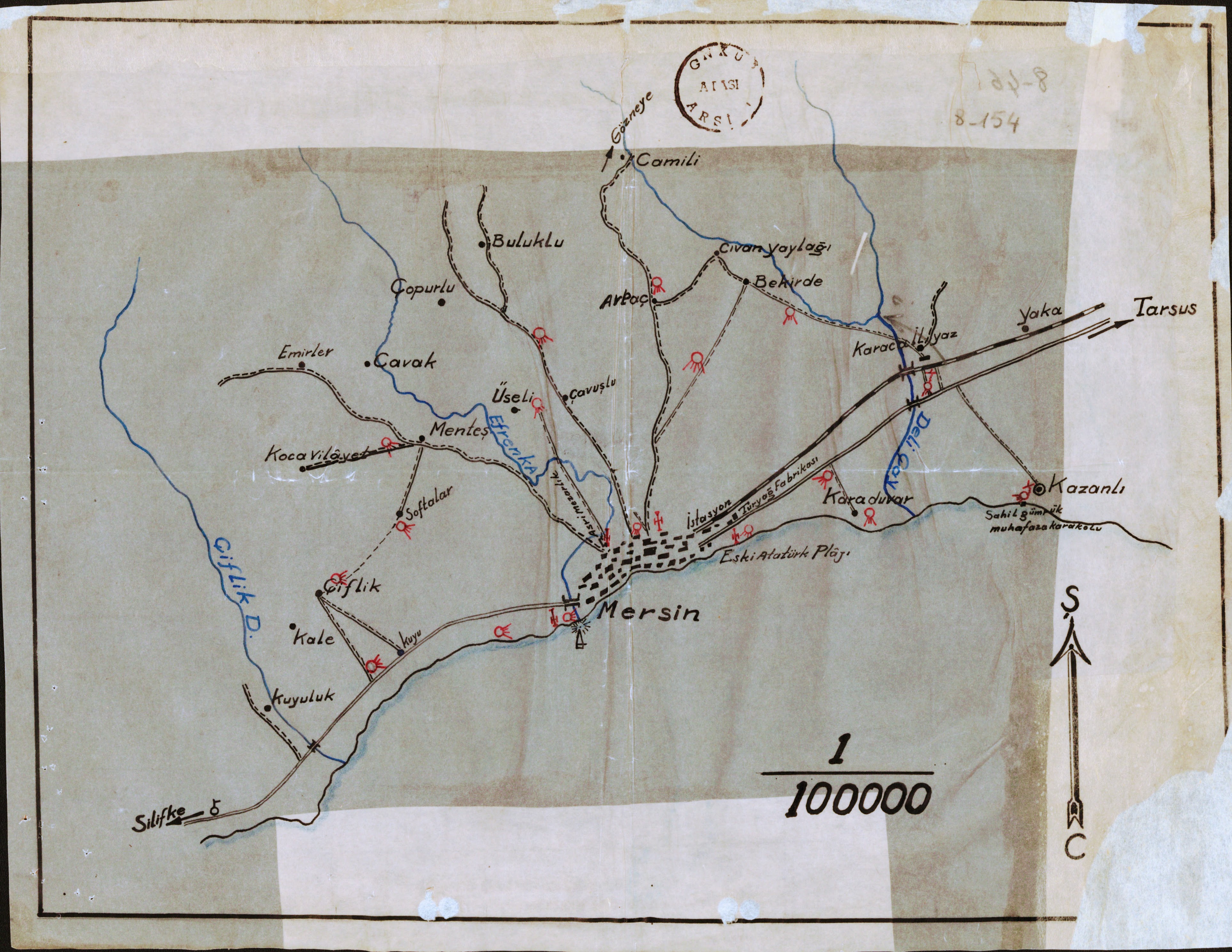
Marked with projected defensive sites, the 1:100,000 map of Mersin and its surroundings, 1941. ATASE Military History Archives, 110-9-1-14 (4/0/113)
Architectures of anticipation names how Turkey, officially neutral yet deeply entangled in the Second World War, reshaped its environments between 1935 and 1945. The expectation of conflict generated infrastructures, standards, and surveys, and redistributed responsibilities across institutions, experts, and publics. This future-oriented mindset materialized in ports and trenches, in manuals and gas-mask drills, and in the atmospheres and vulnerabilities of cities. The talk examines three acts through which this orientation becomes visible. In the south, army sergeant Vecihi Akın’s twenty-one-day field notes and sketches, produced while translating for a visiting British general, capture the routines of coastal defense under neutrality. Moving from decisions on defending hills to the social rhythms of travel, his records reveal intertwined practices of territorial assessment, diplomacy, and Allied information-gathering. In Istanbul, journalist Nusret Sefa Coşkun’s series on the Byzantine cisterns revisited the city’s underground at a time when shelter construction stalled and finances were strained. His reports on damp vaults, blocked passages, and unexpected capacities reframed these spaces as practical assets, turning the subterranean past into a prospective infrastructure of protection later echoed by foreign experts and municipal decisions. At the Red Crescent’s gas-mask factory, chemist Nuri Refet Korur’s manuals, journal writings, and experiments chart preparation at the scale of the body. The factory’s respirator production, largely undertaken by women workers, paired with Korur’s technical work to form a laboratory of design, discipline, and care, shaping new domestic expertise around toxicity and protection. These acts show how futures of destruction were made workable in the present: by mobilizing bureaucracies, furnishing environments, and inscribing routines onto bodies. They reveal communicative, territorial, organizational, and epistemological practices through which environments became governable under crisis, authority and labor shifted, and fear and hope informed spatial imagination. This framework clarifies how projected futures of war, climate, or displacement, reorder the present and why such dynamics matter for architectural history.
***
From Fences to Statutes: Privacy, Property, and Self-Governance in Post-Detonation Los Alamos, 1955-1965
LEALLA SOLOMON
Princeton University
Respondent: Heather Jahrling, Princeton University
The Zia Company Electric Utility, 1961,
Cowan Collection, Los Alamos Historical Society Archives, Los Alamos, New Mexico, Community,
Box 6,
Folder 36. Histories of American domesticity regard privacy as a building’s relationship to the exterior. Discourses of model suburban living have elevated Levittown as the postwar model of American living, effectively marking privacy through the typology of the suburban house and its appurtenances. The fence, lawn, shaded windows, curtains, and acoustic measures have established themselves as markers of privacy in modernity, equating privacy with the ability to separate the individual from the adjacent exterior. This presentation seeks to challenge the canonical presumption by interrogating the urban planning of Los Alamos—the infamous atomic energy town—after the detonation. It contends that under the mantle of “disposal plans” ( the Atomic Energy Commission’s federal plan to privatize Manhattan Project towns and transform them into self-governed entities), the Atomic Energy Commission reinvented American privacy and individuality. Through an extensive archival investigation of reports, studies, recommendations, official letters, and community registers produced between 1955 and 1965 in the attempt to safeguard and promote domestic nuclear production through the creation of the town’s “self-governance,” I mobilize the notion of the private from the realms of domestic design to urban planning, management, and assertion of control. In this presentation, I will show how previous privacy-generating entities, rooted in domestic architectural settings, morphed into a legal and economic mechanism that prioritized administrative and interiorized separation from the one exhibited to the outside. With an emphasis on property deeds and transfers, the ability to separate shared utilities and mortgage payments (both between families and between citizen entities and the federal government), and the simple legal definition transfer of a typology (from “multi-family house” to “single family house”), this presentation seeks to mobilize architectural privacy into the realms of law, governance, and politics. Reconfiguring privacy’s material assumptions, I challenge how privacy is thought of, conceived, practiced, and performed in the postwar world.
5 May 2026
11:00 AM EDT / 5:00 PM CEST
11:00 AM EDT / 5:00 PM CEST
Swiss Safe Space Imaginaries: Spatial Archetypes of Stability,
Abundance, and Racialized Complicity
Abundance, and Racialized Complicity
KHENSANI JURCZOK-DE KLERK
ETH Zürich
Respondent: Sarah Moses, Harvard University Graduate School of Design
ETH Zürich
Respondent: Sarah Moses, Harvard University Graduate School of Design

Khensani Jurczok-de Klerk, Yearnings for Homeplace, from Within the Nuclear Family House, 2024, collage.
This sub-chapter interrogates the production of “safe space” in Switzerland, examining how safety is spatially constructed through national imaginaries of stability, neutrality, and abundance. While the notion of safe space emerges from social movements as a demand for protection and recognition, in the Swiss context it is recast as a cultural and spatial ideal embedded in everyday environments. This ideal is sustained not only through political discourse, but through recurring spatial archetypes tha render safety visible, legible, and seemingly self-evident. Focusing on two such archetypes–the countryside and the domestic kitchen cupboard – the sub-chapter traces how safety is socially and materially staged across territorial and domestic scales. The countryside, often imagined as pastoral, orderly, and self-contained, operates as a site of regulated visibility and social normativity, where belonging is structured through racialized and gendered expectations. The kitchen cupboard, emblematic of domestic abundance, extends this logic through practices of consumption, embedding global histories of extraction, racialized representation, and economic inequality within the intimate routines of everyday life.
Drawing on oral histories of Zeedah Meierhofer-Mangeli, the founder of the Treffpunkt Schwarzer Frauen (1993–2010), the analysis foregrounds Black feminist perspectives as a form of situated knowledge through which these spatial conditions become critically legible. Her accounts reveal how spaces that signify safety at a national level can simultaneously produce isolation, invisibility, and conditional belonging. Rather than treating safety as a neutral or universally accessible condition, the sub-chapter positions it as a spatial project structured through processes of selection, normalization, and exclusion. In so doing, it unsettles the myth of Swiss safe space and advances a socio-spatial
understanding of safety that recognizes its uneven distribution and its entanglement with racialized and gendered forms of violence.
Drawing on oral histories of Zeedah Meierhofer-Mangeli, the founder of the Treffpunkt Schwarzer Frauen (1993–2010), the analysis foregrounds Black feminist perspectives as a form of situated knowledge through which these spatial conditions become critically legible. Her accounts reveal how spaces that signify safety at a national level can simultaneously produce isolation, invisibility, and conditional belonging. Rather than treating safety as a neutral or universally accessible condition, the sub-chapter positions it as a spatial project structured through processes of selection, normalization, and exclusion. In so doing, it unsettles the myth of Swiss safe space and advances a socio-spatial
understanding of safety that recognizes its uneven distribution and its entanglement with racialized and gendered forms of violence.
***
Unsettling the Typology:
Mappila Muslim Women’s Reimaginings of Gendered Domestic Space
(Kerala, India)
AKMA NAZAR
University of Westminster
University of Westminster
Respondent: Mehwish Abid, McGill University

Routine scene in a Mappila home (author’s house) - the father casually occupies the veranda, while the mother cautiously retreats behind a wall, negotiating privacy and visibility from the street beyond - a subtle demonstration of tensions and conflicts between gender and space.
This research examines how gender is embedded in the contemporary (1980s-present) domestic typology of Mappila Muslim homes in Malabar, Kerala, focusing on the production and negotiation of domestic space through women’s perspectives. Architectural historiography on the Mappila community has overwhelmingly privileged the sacred or monumental (particularly mosque architecture) while leaving the architectures of everyday life underexplored. Where domesticity is addressed, scholarship has tended to emphasise traditional aristocratic residences, overlooking proletarian and contemporary homes that constitute the majority experience. This neglect reflects a broader tendency in architectural discourse to privilege the public realm over the private, rendering ordinary domestic environments analytically marginal.
My project responds to this gap by exploring how Mappila women, particularly homemakers, tactically and subversively exercise spatial agency within contemporary homes shaped by Islamic design principles, regional syncretic spatial practices and modernist architectural ideals. It unpacks ways in which these domestic spaces respond, or fail to respond, to women’s personal, social, cultural, spiritual, and religious needs.
Methodologically, the project adopts a relational autoethnographic approach combining family research and ‘friendship as method’, using spatial analysis guided by oral histories from women in my family and personal network as critical entry points into wider architectural questions. By foregrounding orality as an architectural research method, it challenges masculinist narratives of the ‘home as haven’ and instead situates women as active repositories of architectural knowledge. A feminist psychoanalytic lens enables me to map women’s affective and spatial desires, thei negotiations of domestic spaces/boundaries, and the ‘leftover’ or unarticulated dimensions of dwelling absent from typological discourse.
Through one case study, my presentation will demonstrate the gendered spatial framework of these homes (authorship, spatial layout and use, homemaking practices, etc.) and how Mappila women, through everyday practices and performances, interrupt and reimagine their prevailing domestic typology. In doing so, it reconceptualises domestic typology not as a static cultural form, but as a contested terrain of spatial agency, contributing to broader debates in architectural historiography and feminist spatial theory.
My project responds to this gap by exploring how Mappila women, particularly homemakers, tactically and subversively exercise spatial agency within contemporary homes shaped by Islamic design principles, regional syncretic spatial practices and modernist architectural ideals. It unpacks ways in which these domestic spaces respond, or fail to respond, to women’s personal, social, cultural, spiritual, and religious needs.
Methodologically, the project adopts a relational autoethnographic approach combining family research and ‘friendship as method’, using spatial analysis guided by oral histories from women in my family and personal network as critical entry points into wider architectural questions. By foregrounding orality as an architectural research method, it challenges masculinist narratives of the ‘home as haven’ and instead situates women as active repositories of architectural knowledge. A feminist psychoanalytic lens enables me to map women’s affective and spatial desires, thei negotiations of domestic spaces/boundaries, and the ‘leftover’ or unarticulated dimensions of dwelling absent from typological discourse.
Through one case study, my presentation will demonstrate the gendered spatial framework of these homes (authorship, spatial layout and use, homemaking practices, etc.) and how Mappila women, through everyday practices and performances, interrupt and reimagine their prevailing domestic typology. In doing so, it reconceptualises domestic typology not as a static cultural form, but as a contested terrain of spatial agency, contributing to broader debates in architectural historiography and feminist spatial theory.
21 April 2026
10:00 AM EST / 4:00 PM CET
10:00 AM EST / 4:00 PM CET
Cultivating Urbanism
TITHI SANYAL
University of Virginia
Respondent: Jessi Quizar, University of Washington
University of Virginia
Respondent: Jessi Quizar, University of Washington

Detroit's Agro-urbanity,
Detroit, USA, 2024 (Image Source: Tithi Sanyal)
For more than 130 years, Detroit has been at the forefront of urban gardening and agricultural initiatives in the United States. While French colonists established Ribbon Farms along the Detroit River in the 1700s, modern urban agriculture in Detroit has been shaped by economic struggles, population decline, ubiquity of vacant land, and food insecurity, starting with the national economic depression of 1893–97. Today, there is widespread adoption of Agroecology- “the science, practice and movement” of conservative agriculture in the city, witnessed through the proliferation of over 2280 networked urban farms and gardens. These land-based projects are enabled by initiatives and policies like the Keep Growing Detroit’s Garden Resource Program, Urban Agricultural Ordinance (2013), and the Detroit Black Farmer Land Fund (2019), which advocate for food sovereignty, particularly within African American communities and are forming an agroecological apparatus.
This talk will discuss the forces reshaping Detroit’s identity from a post-industrial city into an Agrarian City. It will demonstrate how Actor-Network Theory can serve as a methodology to examine the history of Detroit's agroecological landscape, while also examining the motivation and agency of the actors involved in the network. It will situate Detroit’s agroecological landscape within the broader trajectory of urban agriculture, highlighting its influence on urban planning and governance since the economic depression of 1893–97. At the center of this inquiry lies the question of how actants interact and what outcomes arise from these interactions that inform urban planning, design, and governance.
This talk will discuss the forces reshaping Detroit’s identity from a post-industrial city into an Agrarian City. It will demonstrate how Actor-Network Theory can serve as a methodology to examine the history of Detroit's agroecological landscape, while also examining the motivation and agency of the actors involved in the network. It will situate Detroit’s agroecological landscape within the broader trajectory of urban agriculture, highlighting its influence on urban planning and governance since the economic depression of 1893–97. At the center of this inquiry lies the question of how actants interact and what outcomes arise from these interactions that inform urban planning, design, and governance.
***
Presence, Calibration and Failure: Spatial and Knowledge Strategies in the Co-production of Drainage Infrastructures.
ALESSIO MAZZARO
Politecnico di Torino
Respondent: Matthew Kennedy, Harvard University
Politecnico di Torino
Respondent: Matthew Kennedy, Harvard University
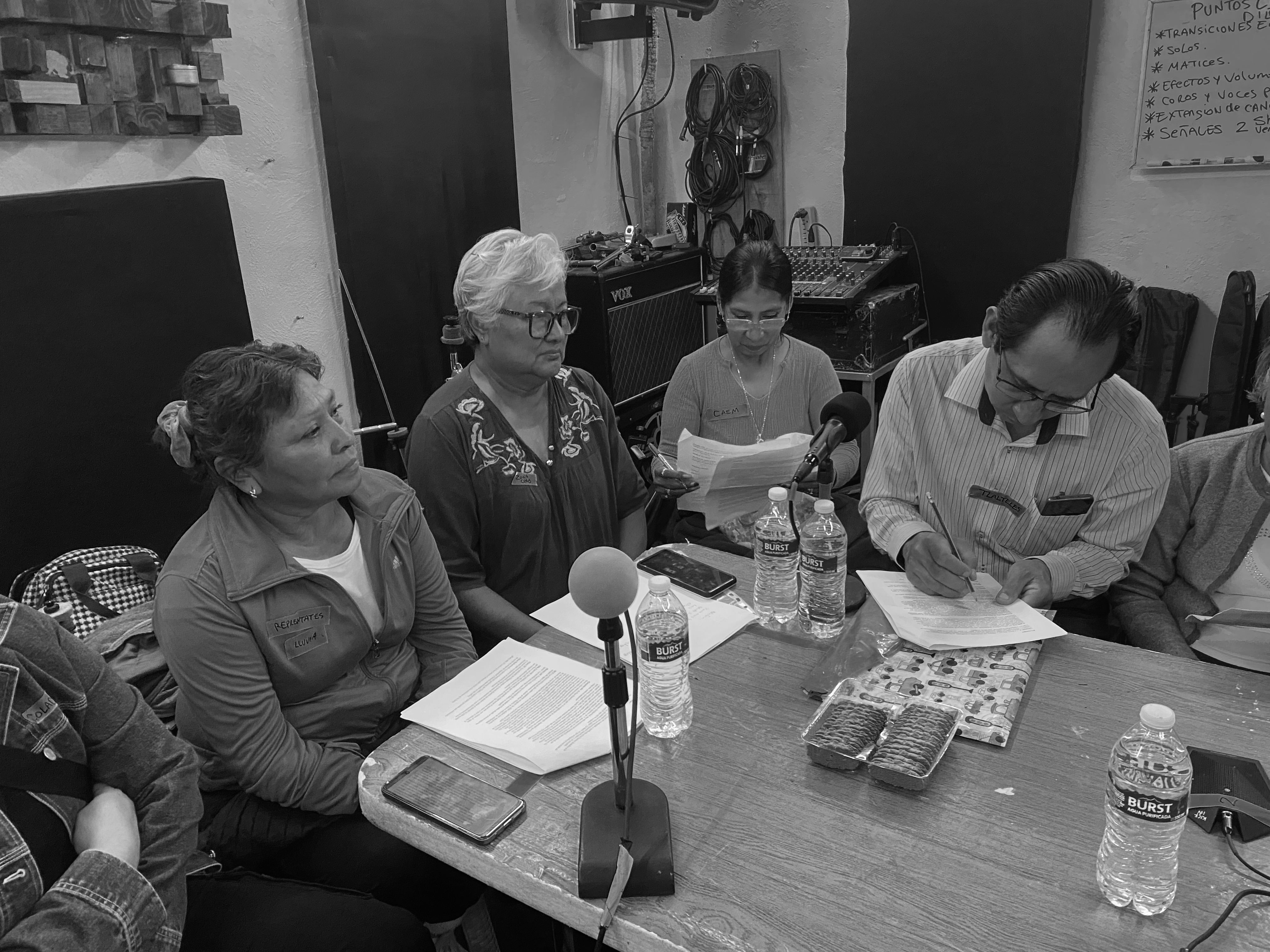
Workshop of Radionovela, July 2025, Colonia Culturas de Mexico.
The peripheries of Sao Paulo and Mexico City are territories where the alterations of water bodies, urban development, and the conflict between opposing interests and visions are so strong it may be impossible to conceive of a definitive solution to the problems related to water. Drawing on fieldwork experience and participatory art activities with inhabitants in two different case studies, this contribution examines the dynamics of co-producing knowledge and infrastructures through the categories of failure, presence, and calibration. The territory is approached as a stage where, in response to water management challenges, actions are rehearsed and revised—together with the public—by observing and learning from their effects.
In Torresmo (BZ), an informal settlement divided by a stream whose channelization increased the incidence of flooding, failure (of a drainage infrastructure, of state technicians and of a university laboratory) generates knowledge and materializes the forces at play in the territory. Here, through a list of doubts and questions (triggered by artistic activities) about a future lamination basin, residents engage with the Secretariat of Infrastructure (SIURB), contributing to exerting pressure and to voicing alternative ways of managing water in the territory.
In Colonia Culturas de México (MX), a settlement at the edge of the former Lake Chalco, a local collective dealing with the construction of a new wastewater pipe, participates in the making of the infrastructure: being present (Taylor 2020) with their bodies and questions in the construction site and conducting a practical inquiry (Dewey 1938). Monitoring in a Whatsapp group, water level and issues in the infrastructure elements, they participate in the calibration of the drainage infrastructure. Here, calibration, that is usually a technical/engineering procedure oriented toward a predetermined outcome, becomes epistemic and a collective process of relational adjustment (Latour 2005) among heterogeneous actors (engineers, inhabitants, infrastructural elements).
In Torresmo (BZ), an informal settlement divided by a stream whose channelization increased the incidence of flooding, failure (of a drainage infrastructure, of state technicians and of a university laboratory) generates knowledge and materializes the forces at play in the territory. Here, through a list of doubts and questions (triggered by artistic activities) about a future lamination basin, residents engage with the Secretariat of Infrastructure (SIURB), contributing to exerting pressure and to voicing alternative ways of managing water in the territory.
In Colonia Culturas de México (MX), a settlement at the edge of the former Lake Chalco, a local collective dealing with the construction of a new wastewater pipe, participates in the making of the infrastructure: being present (Taylor 2020) with their bodies and questions in the construction site and conducting a practical inquiry (Dewey 1938). Monitoring in a Whatsapp group, water level and issues in the infrastructure elements, they participate in the calibration of the drainage infrastructure. Here, calibration, that is usually a technical/engineering procedure oriented toward a predetermined outcome, becomes epistemic and a collective process of relational adjustment (Latour 2005) among heterogeneous actors (engineers, inhabitants, infrastructural elements).
7 April 2026
*8:00 AM EDT / 2:00 PM CEST
Mediating Architecture:
An Institutional Study of Knowledge Production and Dissemination at the
Canadian Centre for Architecture, 1979 - 1999
NATÁLIA CORREIA BRANDÃO
Technical University of Munich
Respondent: Masamichi Tamura, Institute of Science Tokyo

Inaugural Exhibition “Photography and Architecture: 1839–1939”, 1982. Curator: Richard Pare, CCA. Credit: Collection Centre Canadien d'Architecture/Canadian Centre for Architecture, Montréal.
Oral history, literature review and archival research are the methodological tools in this elaboration, which are of help to elucidate the broad question of how cultural institutions dedicated to architecture produce architectural knowledge in the interface between the interior and the exterior of the discipline. Specifically, the question is hoped to be answered through the institutional analysis of the CCA, identified as one of the most relevant cultural institutions with an architectural collection, and with a gap in the literature related to its critical analysis in scientific publications. The starting point of the thesis is its act of foundation in 1979 in Montreal by architect and philanthropist Phyllis Lambert, and goes over the two decades in which she acted as founder and president.
Overall, this presentation aims to present the overall structure of the thesis, its methodology and recent findings.
***
“Worlding” on Display: The Chinese Pavilion at the Venice Architecture Biennale
(2006-2023)
YARAN ZHANG
UNIVERSITY OF MANCHESTER
Respondent: Alicia Lu Lin, Ca’ Foscari University of Venice
 The entrance to the Chinese Pavilion at the Arsenale, photo by Yaran Zhang, 2023.
 Drawing on archival research, oral history, and media analysis, this research investigates the curatorial strategies, theme choices, and exhibit formats of the Chinese Pavilion between 2006 and 2023. It identifies three phases in China’s participation at the Venice Architecture Biennale: Phase I (1991-2006) relied on symbolic motifs, prioritising visibility over narrative depth; Phase II (2008-2016) marked a shift toward critical engagement with social and architectural issues; Phase III (2018-2023) reflects intensified state involvement, characterised by immersive technologies and large-scale construction displays. These curatorial changes closely align with national policies over the past three decades, including Jiang Zemin’s “Bring in and Go Global” in 1996, Hu Jintao’s “Stimulate Cultural Creativity” in 2007, and Xi Jinping’s “Tell a Good China Story” in 2013.
By examining the Chinese Pavilion within the uneven geography of national pavilions at the Giardini and Arsenale in Venice, this study reveals the Biennale’s character—part art fair, part museum, and part geopolitical tool—through which China negotiates its evolving cultural identity and projects soft power on the global stage.
24 March 2026
8:00 AM EST / 1:00 PM CET
Behind Closed Doors and Windows: Constructing the Domestic Interior in Greece,
1880–1920
THODORIS CHALVATZOGLOU
National Technical University of Athens
Respondent: Anastasia Gkoliomyti, Tokyo Gakugei University, Wenzhou-Kean University
 “My Sister Penelope’s Room” Athina N. Saripolou, June 1882, watercolor,
 38 × 30.5 cm. Private Collection of Athina Angelopoulou. Reproduced from Athina Saripolou-Liva: A 19th-Century Athenian Painter. Athens: Bastas–Plessas.
The scarcity of visual sources depicting urban domestic interiors in Greece from the late 19th to the early 20th century became apparent to me at the very beginning of my research. A few surviving
photographs and some scattered studies on furniture offered partial insights into spatial organization, materials, and furnishings. These allowed me to sketch a rough picture of how rooms evolved during
the period I was studying. Yet, what remained missing was a narrative—an image of how these spaces were inhabited, and by whom.
Some answers emerged with the discovery of a series of housekeeping manuals aimed at young women, at future housewives. The first, published in 1885, proved particularly revealing: such guides prescribed in detail nearly every aspect of domestic life, from cooking and hygiene to the construction and furnishing of the home. A comparative analysis of these texts provided a clearer perspective on the domestic interior, though I still had to ask to whom exactly these manuals referred. Moreover, I needed numerical data on the furniture and objects that made up an actual household of the period.
Unexpectedly, a series of legal documents—specifically dowry contracts—helped fill this gap. The dowry system, deeply embedded in Greek society, required women to bring property into marriage. The contracts I examined contained precise inventories of household furnishings, cooking utensils, and clothing allocated to brides by their families. These documents provided invaluable data for reconstructing the image of the domestic interior in which a newly married couple would live.
This paper outlines a research methodology for studying the history of the domestic interior through non-architectural texts. By drawing on disciplines such as demography, the history of emotions, and family studies, the image of what happened behind closed doors and windows becomes significantly clearer.
Some answers emerged with the discovery of a series of housekeeping manuals aimed at young women, at future housewives. The first, published in 1885, proved particularly revealing: such guides prescribed in detail nearly every aspect of domestic life, from cooking and hygiene to the construction and furnishing of the home. A comparative analysis of these texts provided a clearer perspective on the domestic interior, though I still had to ask to whom exactly these manuals referred. Moreover, I needed numerical data on the furniture and objects that made up an actual household of the period.
Unexpectedly, a series of legal documents—specifically dowry contracts—helped fill this gap. The dowry system, deeply embedded in Greek society, required women to bring property into marriage. The contracts I examined contained precise inventories of household furnishings, cooking utensils, and clothing allocated to brides by their families. These documents provided invaluable data for reconstructing the image of the domestic interior in which a newly married couple would live.
This paper outlines a research methodology for studying the history of the domestic interior through non-architectural texts. By drawing on disciplines such as demography, the history of emotions, and family studies, the image of what happened behind closed doors and windows becomes significantly clearer.
***
Session Not Convened
Small spaces of Morocco: Rooftop Terraces, Women and the Colonial Gaze
ZINAB HIMEUR
National School of Architecture Rabat
Respondent: Majdi Faleh, Nottingham Trent University
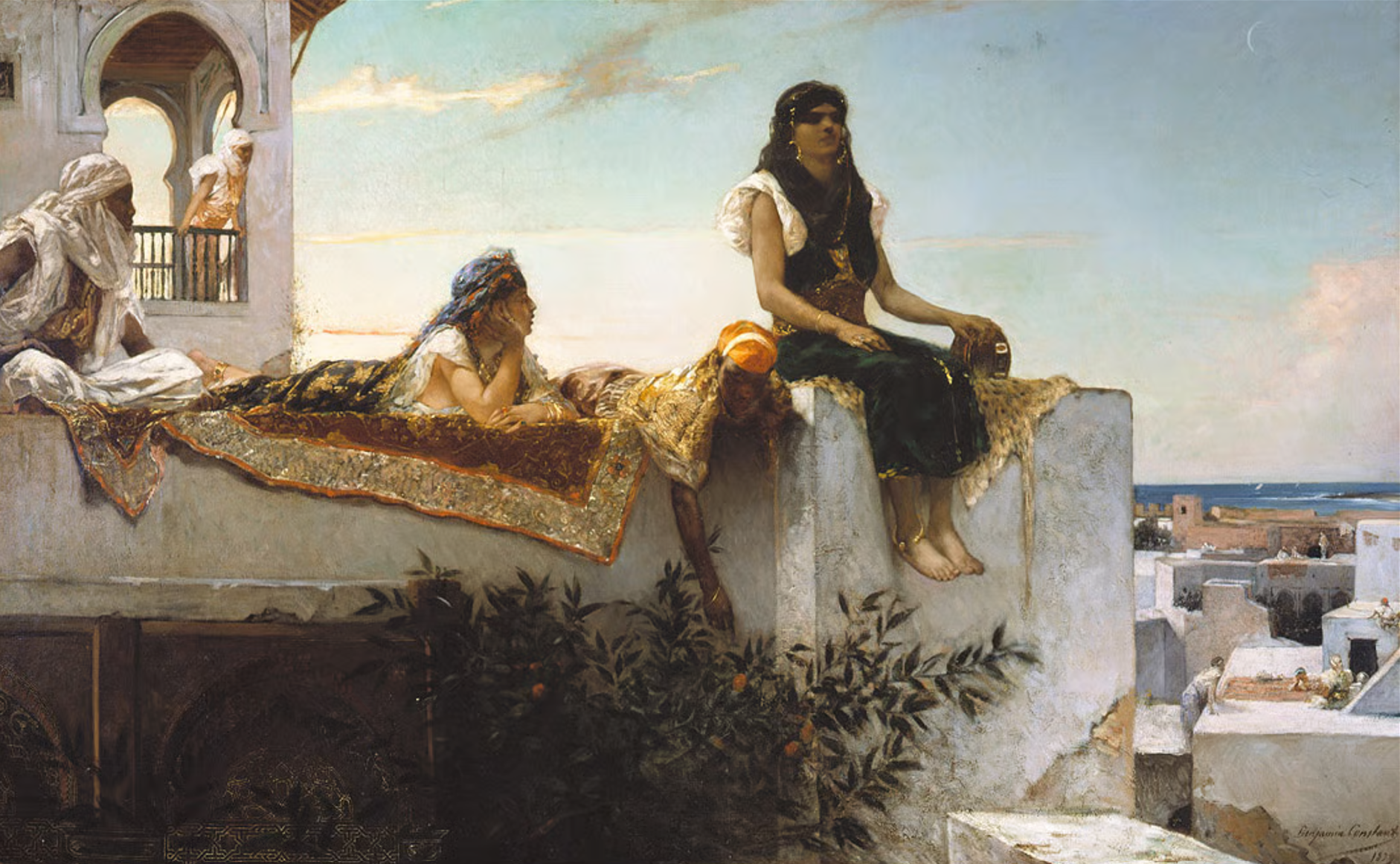 Jean Benjamin Constant – Women on rooftop terraces Tangier 1872 - Copyright Musée des Beaux Arts de Montréal (Canada)
 This paper proposes a micro-historical reading of colonial Morocco through an overlooked architectural space: the rooftop terrace. Typically relegated to narrative interstices or treated as mere backdrops, rooftop terraces rarely emerge as significant spatial sites in their own right.
Building upon Swati Chattopadhyay’s work “Small Spaces: Recasting the Architecture of Empire”, this study explores how these elevated spaces were visually and culturally constructed and reconstructed, not only through urban planning and architectural form, but also within colonial literature and art, in Morocco under the French Protectorate (1912–1956).
This paper performs the archeology of these spaces, tracing how terraces mediated the encounter between colonial observers and local observed. It analyzes rooftops as thresholds between private indigenous life and the imperial gaze, where bodily visibility, modesty, and urban power relations converged. By shifting the scale from monuments to rooftops, from state plans to domestic margins, this study reveals how the Medina’s roofscape engaged in spatial politics, not only of colonial hegemony and exoticization, but also of anticolonial care and resistance.
Ultimately, this research contributes to a broader understanding of how minor spaces shaped the intimate geographies of the French colonial order, offering new ways to read colonialism, resistance and care in the architectural margins.
Building upon Swati Chattopadhyay’s work “Small Spaces: Recasting the Architecture of Empire”, this study explores how these elevated spaces were visually and culturally constructed and reconstructed, not only through urban planning and architectural form, but also within colonial literature and art, in Morocco under the French Protectorate (1912–1956).
This paper performs the archeology of these spaces, tracing how terraces mediated the encounter between colonial observers and local observed. It analyzes rooftops as thresholds between private indigenous life and the imperial gaze, where bodily visibility, modesty, and urban power relations converged. By shifting the scale from monuments to rooftops, from state plans to domestic margins, this study reveals how the Medina’s roofscape engaged in spatial politics, not only of colonial hegemony and exoticization, but also of anticolonial care and resistance.
Ultimately, this research contributes to a broader understanding of how minor spaces shaped the intimate geographies of the French colonial order, offering new ways to read colonialism, resistance and care in the architectural margins.